Industries
Retail & e-commerce
Storefronts, marketplaces, catalogue and master data, Document AI for finance, assistants for staff and customers — for grocery chains and online retailers in the EU and US.
What are the typical challenges in retail and e-commerce software?
Retail platforms fail in predictable places: the sale-day peak nobody load-tested, a catalogue full of duplicates and missing attributes, supplier paperwork processed by hand, and customer feedback scattered across stores, apps and marketplaces. The stakes keep growing: Eurostat (2024) reports that roughly three quarters of EU internet users bought goods or services online in the previous twelve months, and Baymard Institute’s long-running aggregate (2024) puts average cart abandonment near 70%, much of it caused by checkout friction and performance.
- Peak traffic on sale days the platform was never tested for
- Catalogue quality: duplicates, missing attributes, inconsistent SKUs across suppliers
- Thousands of supplier invoices and returns processed by hand
- Customer feedback scattered across stores, apps and marketplaces
What do we build for retail and e-commerce?
We build e-commerce platforms and marketplaces on Laravel, Django or Node with Vue or React storefronts, product-information and master-data systems with supplier and pricing integrations, mobile apps for customers and store staff with loyalty programmes, and the ERP, WMS, payment and delivery integrations that hold it all together. Storefronts are built against Google’s Core Web Vitals thresholds (web.dev, 2024: LCP under 2.5 s, INP under 200 ms, CLS under 0.1), and every integration is designed for the peak, not the average day.
- E-commerce platforms and marketplaces with Vue/React storefronts
- PIM and master-data systems, supplier and pricing integrations
- Mobile apps for customers and store staff, loyalty programmes
- Integrations with ERP, WMS, payment and delivery providers
Where does AI move the numbers in retail?
AI moves retail numbers in four places: catalogue quality, document processing, demand and pricing, and customer understanding. McKinsey (2021) found that 71% of consumers expect personalised interactions and 76% are frustrated when they do not get them, and that personalisation leaders generate materially more revenue from it than laggards. Our own retail cases follow the same logic: SKU matching and deduplication clean the catalogue, Document AI removes manual invoice and return handling, forecasting and pricing models act on the clean data, and feedback NLP routes topics and sentiment to the people who own them. See cases.
- RAG assistants for store staff and customer support
- Document AI for invoices, returns and supplier documents
- Catalogue SKU matching and deduplication
- Demand forecasting, dynamic pricing, recommendation engines
- Customer-feedback NLP: topics, sentiment, routing to owners
Rule-based vs ML recommendations: which do you need?
Start with rules if your catalogue is small or your traffic is low; move to a model once you have months of behavioural data and enough sessions to measure a lift. Rules (bestsellers, same category, bought together) are explainable and need no history; ML recommenders learn taste and context but need data, evaluation and monitoring. Most stores run both: rules as a fallback for cold-start users and items, a model for everything else.
| Criterion | Rule-based | ML recommender |
|---|---|---|
| Data needed | Catalogue only | Months of sessions, orders and events |
| Cold start | Works immediately | Falls back to rules or popularity |
| Personalisation | Segment-level at best | Per user and per session |
| Measurable lift | Limited; hard to improve | A/B-tested and tunable |
| Effort to maintain | Manual merchandising | Retraining, monitoring, feature pipelines |
Why Glanit for retail?
Because four of our published cases are retail: store assistants, invoice Document AI, catalogue deduplication and feedback NLP for a grocery chain operating in the EU and US, and because we know the peak-season checklist by heart. Global retail e-commerce sales are estimated by Statista (2024) at around $6 trillion, so a platform that survives Black Friday is not a nice-to-have. We load-test before the season, design integrations to fail gracefully and ship AI only where clean data can back it. Start with a conversation.
Case studies in this industry
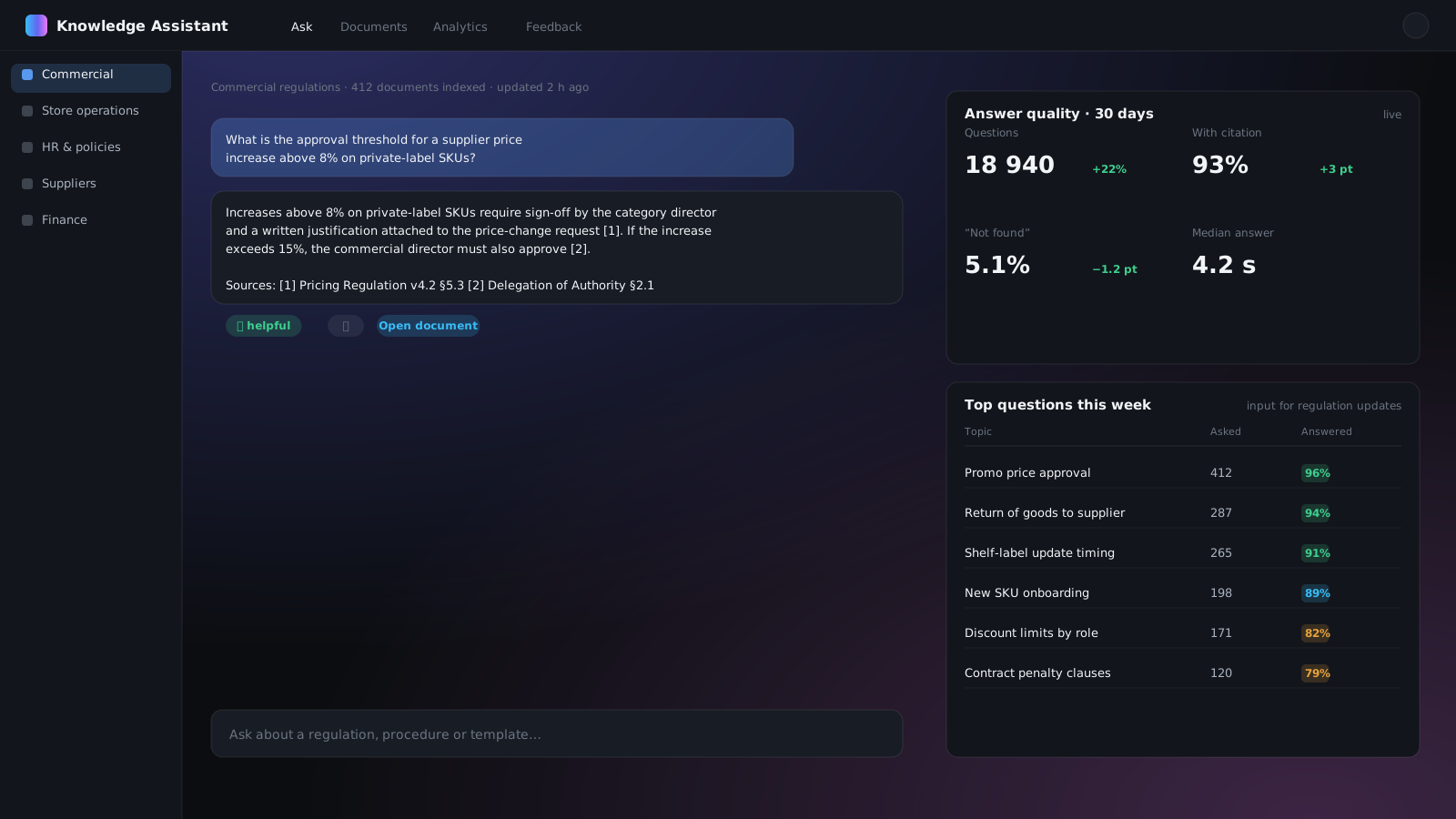
Grocery retail chain, EU & US (under NDA)
−55%
time spent searching regulations
AI knowledge assistants for a 30 000-employee grocery chain
Three RAG assistants on one platform — for commercial staff, store directors (by voice, from the shop floor) and HR — answer questions from corporate regulations with a citation to the exact clause, or say honestly that they do not know — so staff stop phoning head office for routine questions.
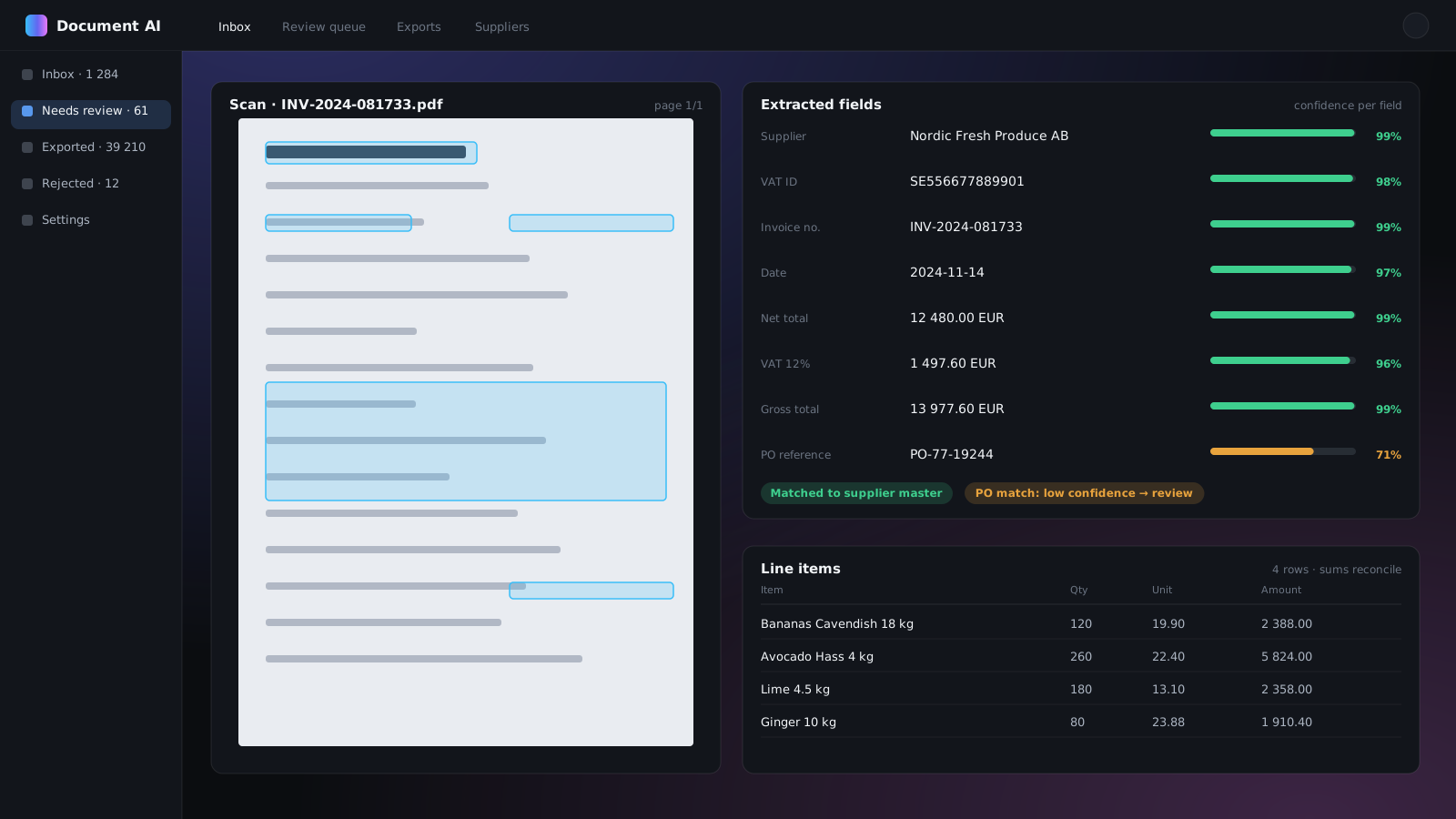
Grocery retail chain, EU & US (under NDA)
88%
straight-through, no human touch
Document AI that reads 1 300 supplier invoices a day
Scans and photos of invoices, delivery notes and acts go through a multimodal model that extracts typed fields with a confidence score per field, reconciles them with the supplier and contract master data, and posts to the ERP. Only low-confidence documents reach a human — roughly one in nine.
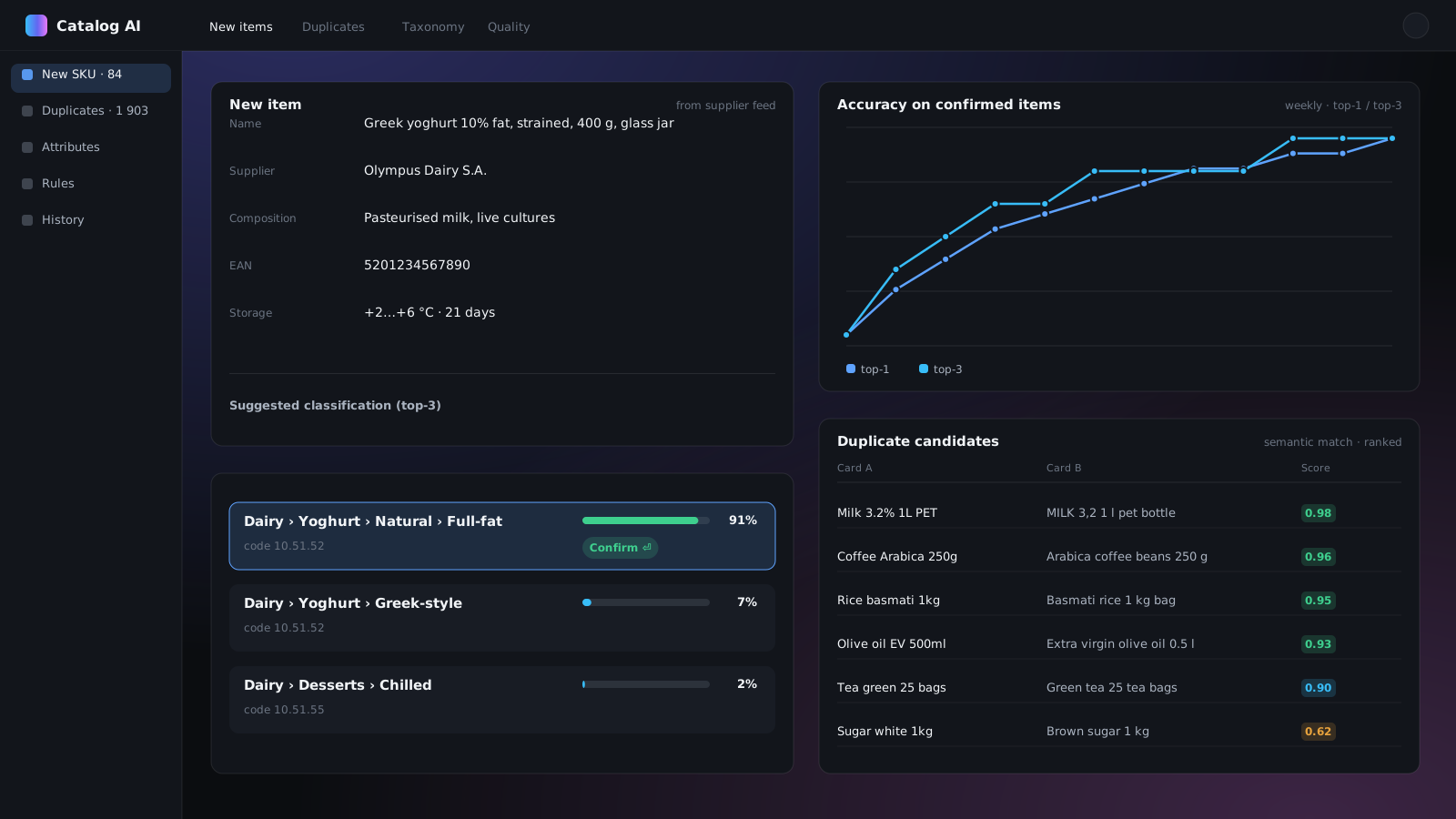
Grocery retail chain, EU & US (under NDA)
−78%
time to classify a new SKU
Catalogue AI: classifying new SKUs and cleaning 182 000 product cards
Two models on the product catalogue of a grocery chain: one suggests the classification code and category for every new item with top-3 probabilities, the other finds duplicate product cards semantically. Category managers confirm with one click instead of searching the classifier by hand; every confirmation feeds back into training.
Grocery retail chain, EU & US (under NDA)
2.4 h
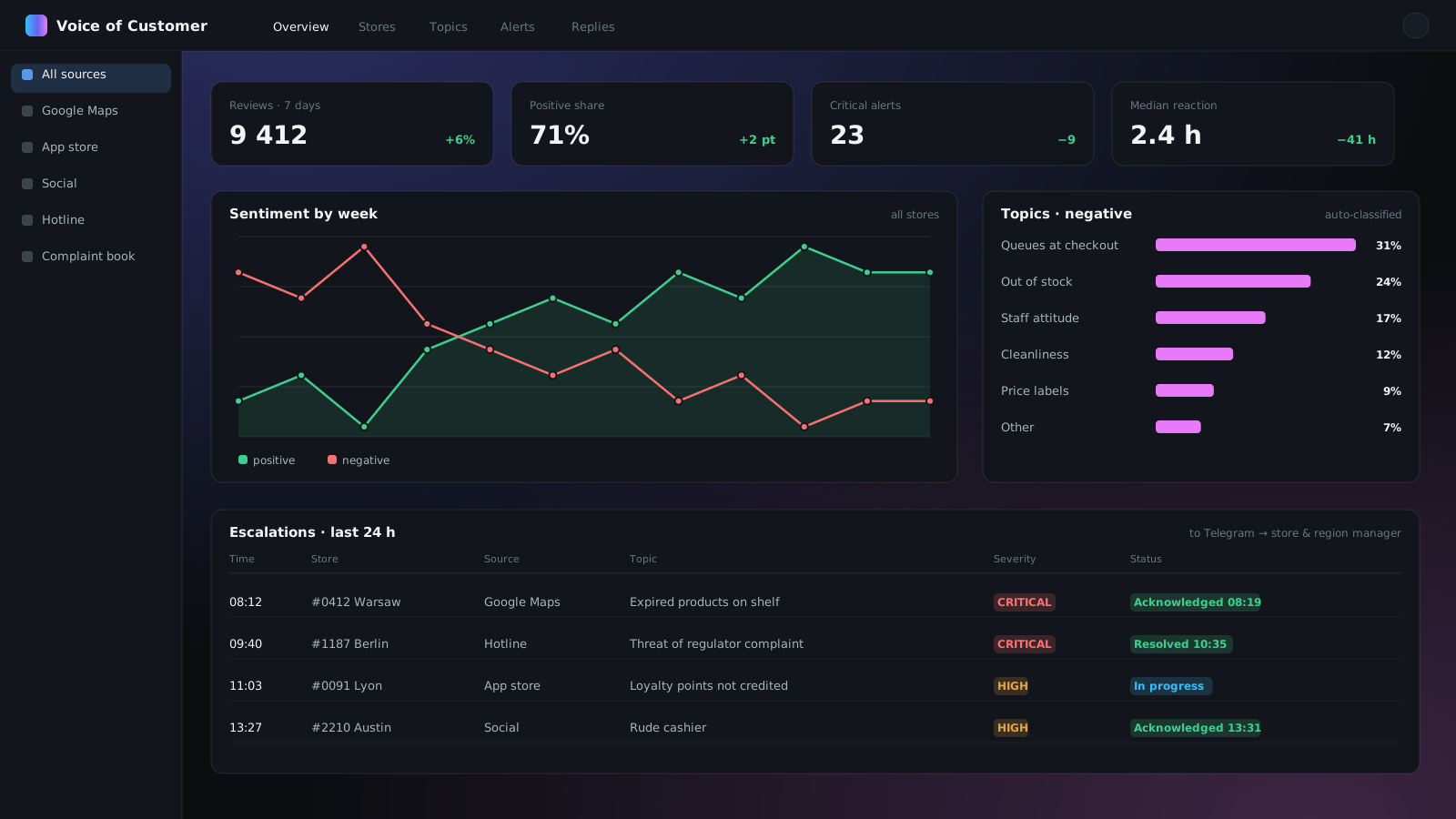
median reaction to a critical review, from 52 h
Voice of customer: 12 review sources, one AI-classified stream
Reviews from maps, app stores, social networks, the hotline and the in-store complaint book flow into one system that classifies each by topic, sentiment, store and severity, escalates critical ones to the responsible manager within minutes, and gives management a live, per-store picture instead of a monthly digest.