Industries
Media, gaming & sports analytics
High-volume event platforms, ratings and statistics, community products and content pipelines — our own products live here.
What are the typical challenges in media, gaming and sports-analytics software?
These products live on event streams: millions of match, play or interaction events a day that must be parsed fast and stored cheaply, ratings and statistics that fans argue about and must therefore trust, communities that need authentication, moderation and fair play, and content production that does not scale by hand. Newzoo (2024) estimates the global games market at roughly $187 billion with more than 3 billion players, and the EU Digital Services Act (Regulation (EU) 2022/2065) now sets formal obligations for content moderation and complaint handling on platforms that host user content.
- Millions of events per day that must be parsed fast and stored cheaply
- Ratings and statistics people argue about and must trust
- Communities that need auth, moderation and fair play
- Content production that does not scale by hand
What do we build for media, gaming and sports?
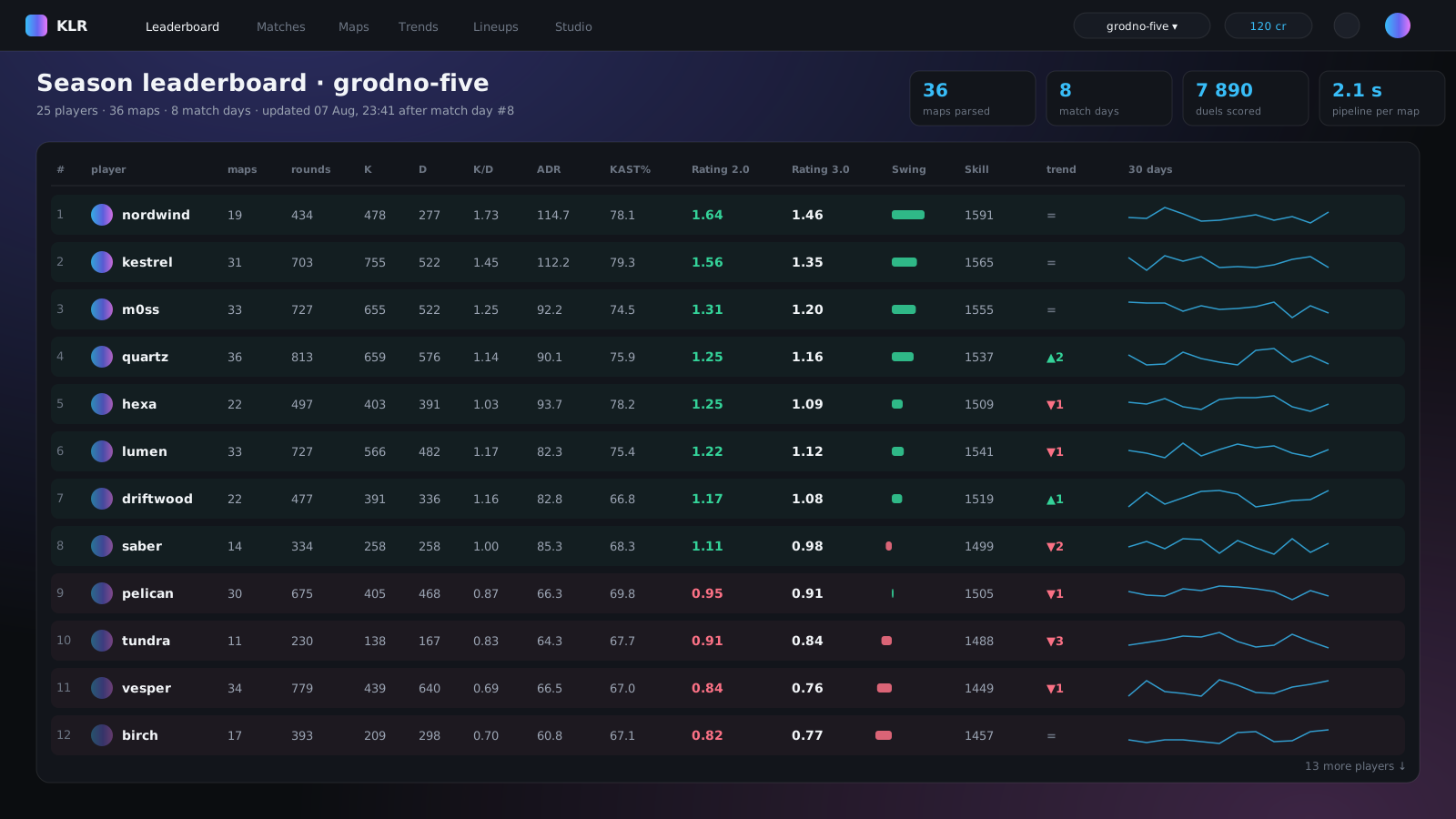
We build event ingestion and analytics platforms on columnar stores and queues, statistics, rating and leaderboard systems, community platforms with Steam and social sign-in, lobbies and payments, and content and media pipelines for rendering and highlights. Steam integration follows the Steamworks Web API and OpenID sign-in (Valve, 2024); event pipelines use Kafka-style queues and ClickHouse-style columnar storage so that a season of data stays queryable in seconds. Our own products, a sports analytics platform and KLR.gg for CS2, run on exactly this stack.
- Event ingestion and analytics platforms (columnar stores, queues)
- Statistics, rating and leaderboard systems
- Community platforms with Steam/social sign-in, lobbies, payments
- Content and media pipelines, rendering and highlights
Where does AI move the numbers in gaming and sports?
AI and statistics move numbers in rating, recommendation, content and moderation. Skill systems follow Glickman’s Glicko-2 (2013 reference implementation note), extended with round-swing style impact metrics that explain why a rating moved; recommendation models personalise feeds and matchmaking; highlight generation turns raw footage and event data into clips; anomaly detection flags smurfing, cheating and toxic behaviour for human review. Deloitte’s Digital Media Trends (2024) shows younger audiences splitting time between games, video and social platforms, so cross-surface personalisation matters more than ever.
- Rating and skill models (Glicko-2, round-swing style impact)
- Recommendation and personalisation
- Automated highlight and content generation
- Moderation and anomaly detection
Why Glanit for media, gaming and sports?
Because we run this stack ourselves, in production, for real communities. A sports analytics platform and KLR.gg for CS2 are our own products, so the ingestion, rating and community code has been argued over by actual fans. Player data is personal data under GDPR (2016), and community platforms attract account takeover and payment fraud, so authentication, rate limiting and moderation tooling are part of the first release. Over 16 years and 500+ projects we have learned to build for the launch-day spike and the long tail of historical queries alike. See cases.